T&S Rohnert Park Spray Foam InsulationT&S Rohnert Park Spray Foam Insulation

Air sealing services in Rohnert Park CA - a tighter house that still vents safely

Drafty rooms, a hot upstairs or a climbing power bill? We close the leaks and make sure your furnace still vents safely.

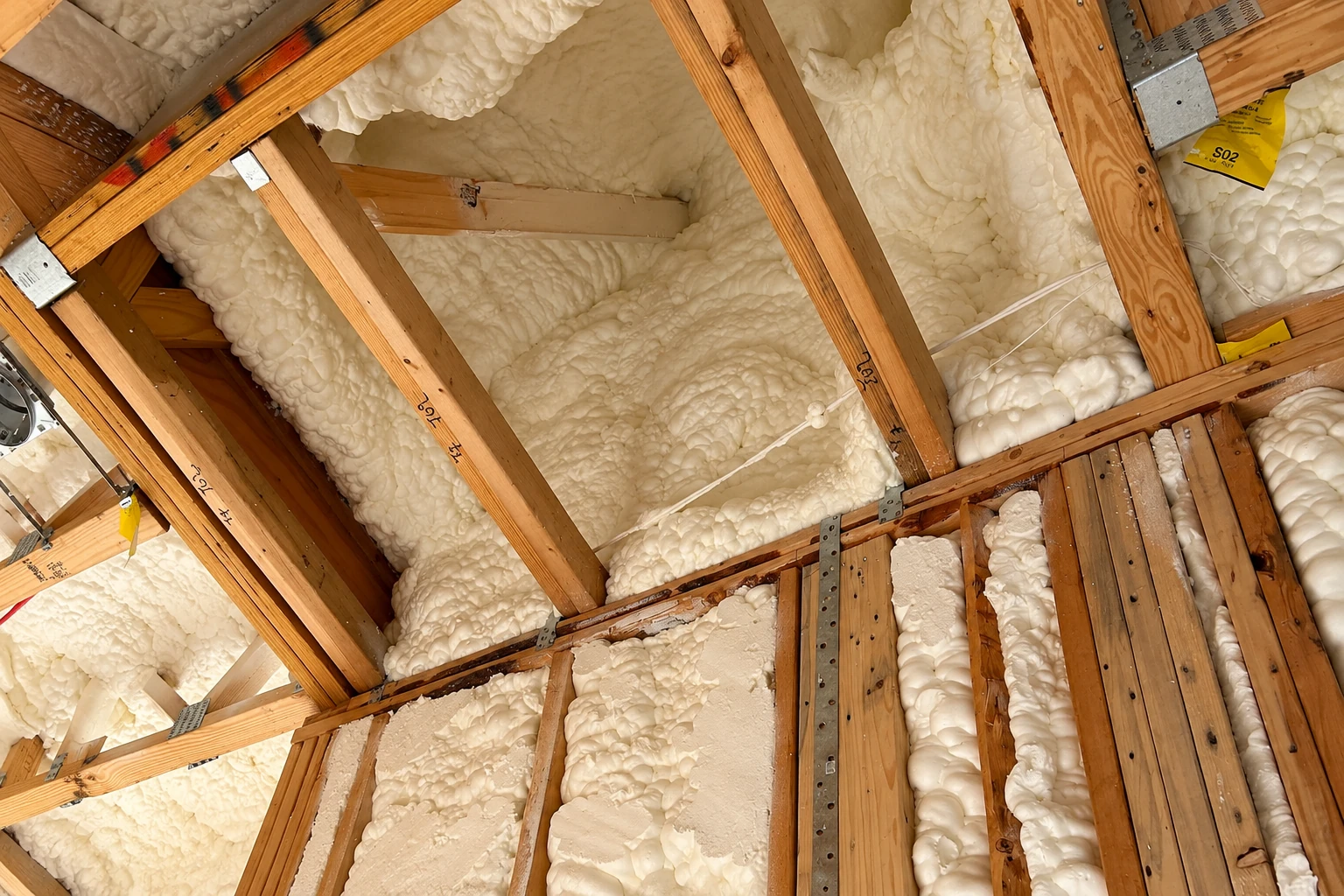
Wooden roof framing is packed with thick, cream-colored spray foam insulation.

Air sealing services in Rohnert Park mean finding the gaps where air slips between your rooms and the attic or crawl space and closing them up, so the house stops feeling drafty and your heating and cooling don't have to work so hard.

What does air sealing actually do for my house?

Most people call us about a drafty bedroom, a hot upstairs or a power bill that keeps creeping up, and leaks are often behind all three. Air coming through a ceiling or floor gap can carry moisture with it too, and over time that can warp wood and lead to mold, which is why I'd rather close the gaps than just pile more insulation on top.

What moves the price is how many gaps there are, how big they are and how easy it is to get around up there. Old insulation that has to come out first adds work, and so does anything that needs fixing before we seal. The schedule turns on those same things. At the estimate I show you what I found and what I'd do first.

California's contractor license classes treat caulking and weather stripping as one kind of work and installing insulation as another. A sealing job often comes right before new insulation goes down over the attic floor, so when I look at your house, I plan the two together instead of treating the insulation as an afterthought.

Where air leaks hide and what gets in the way

The leaks that matter most are ones you'd never spot from inside the house. Here's where we usually find them, and the two things that most often change how a sealing job goes.

Holes you can't see

The biggest leaks are rarely at the windows. They're up top, around can lights, plumbing pipes, wiring holes and the attic hatch itself, where every opening lets warm air rise out of your rooms. If those stay open, any insulation laid over them ends up fighting a draft.

Old insulation in the way

Most attics already have something up there, and it sits right on top of the gaps we need to reach. If it's soaked from an old leak or full of rodent droppings, I'd rather pull it out with insulation removal than seal around it, because new material over dirty material keeps the problem.

How easy it is to get around

A roomy attic with a full-size hatch goes quicker than a low, tight one where the crew crawls across the joists on its knees. The room over the garage is a usual tough spot, and access is one of the first things I look at, because it sets both time and price.

What happens when you call us about air sealing?

Here's how a job runs from your first call to the walk-through at the end, and who you'll be dealing with at each step along the way.

  1. 1

    Call or send a message

    Call us or fill out the form and tell us what's bugging you, whether that's a drafty bedroom, a hot upstairs or cold floors. We'll get back to you and set up a time that works.

  2. 2

    I come out and look

    I head up into the attic or down into the crawl space and take photos. Then we sit down together and I show you what I found, what I'd do first and why.

  3. 3

    Our crew seals the leaks

    On the day of the work, our crew lays down protection for your floors, handles the prep and does the sealing, then adds insulation if that's part of the plan you picked.

  4. 4

    Walk through it together

    Before we pack up, I walk through the finished job with you so you can see what's been sealed. Down the road, a new bath fan or light cut into the ceiling is a fresh hole worth sealing too.

Request an estimate

How we handle air sealing, and why the order matters

Air sealing makes your house tighter, and that's the point, but it also means less stray air reaching anything that burns gas. So before we seal a single gap, I look at your gas furnace, water heater and fireplace to be sure they'll still vent safely once the leaks are closed. If something looks off, we talk it through before any sealing starts.

Then we close up the leaks and leave alone the vents that are meant to breathe, like the ones at the eaves, along the ridge and at the gable ends. Those keep air moving through the attic, and burying them is how moisture ends up in the framing. Around hot flue pipes we use metal flashing and a high-heat sealant rather than regular foam.

Foam is the other way to go. Closed-cell foam insulation, a dense foam that also blocks moisture, seals and insulates in one pass, but it costs more. Below the floor it's a different job, and if your house sits over a basement, the rim joist, the band of wood where the house rests on the foundation, is a big leak we can seal as part of basement insulation.

Seal and top up loose fill

We seal the gaps with caulk and canned foam, then add blown-in insulation, loose fill blown through a hose, on top. For most attics this is what I'd pick, because it does the job for less.

Spray foam the attic

Foam on the underside of the roof seals and insulates at once. It costs more, so I usually only point people this way when the ductwork runs through the attic and needs to sit inside the sealed space.

See where your house leaks and what I'd seal first

Send the form and we'll reply within one business day to set up a time. The estimate is free, done in person at your home, and there's no obligation. I'll go up into the attic or down into the crawl space and show you photos of what I found before you decide anything.

(707) 576-6028

hello@rohnertparksprayfoaminsulation.com

Air sealing, permits and inspections in Rohnert Park and nearby cities

When a job here needs a permit, we apply for it through the city's Building Division, keep you posted and set up the inspections. If it isn't clear whether your job needs one, I check with the city before work starts. Depending on the work, the state may also require HERS testing, a California energy check, and a properly permitted job brings any required testing along with it.

Around Rohnert Park, and over in Cotati and Santa Rosa, most of the calls we get sound alike. A bedroom that won't hold its temperature, an upstairs that runs hot, a cold room over the garage, or an attic the owner has meant to deal with for years. Can lights, a loose hatch cover and old, thin insulation turn up again and again.

Why Rohnert Park homeowners call T&S for air sealing

I started out as a helper on a small insulation crew, hauling bags and crawling through attics, and the lead I worked under taught me to look at the whole house before selling anybody anything. I opened this business in Rohnert Park in 2021, and five years on, that's still how I start every job.

I come out for every estimate myself. Our crew does the work, with me on site or one of our lead installers running the day. We're licensed and insured. Satisfaction guaranteed is our promise, and I'd rather explain what's going on up there in plain words than leave you guessing. When you're ready, call (707) 576-6028 or send us a message.

Basement insulation

If cold floors or a chilly lower level are the complaint, insulating the basement walls and rim joist keeps that air from pulling up through the house.

Closed-cell foam insulation

When ductwork runs through the attic or a spot needs a moisture block, dense foam seals and insulates at the same time, at a higher price.

Cities we cover from Rohnert Park

We're based in Rohnert Park and work across the cities around it in Sonoma and Marin counties. The ones below have their own page, and we go to plenty of others nearby.

Air sealing questions from Rohnert Park homeowners

How much does air sealing cost in Rohnert Park?

There's no set price, because it comes down to how many leaks your house has and how hard they are to reach. A tight attic, old insulation that has to come out first or repairs before sealing all add to it, and foam costs more than sealing plus loose fill. You'll get your own figure after I've been up there.

Is air sealing safe if I have a gas furnace or fireplace?

Yes, when the house's fresh air and venting get checked first. The safe way is to work out how much fresh air the home needs and make sure stoves, ovens, fuel-burning furnaces and fireplaces are vented properly, because without enough oxygen they can put carbon monoxide into the house. That's the appliance check I described above.

What should be checked in the attic before air sealing?

Look for live knob and tube wiring, the old cloth-wrapped kind, vermiculite insulation, which looks like gray-brown pebbles, bath fans that dump into the attic and roof leaks. Guidance for sealing crews says to stop work when any of those turn up, so a wiring or roof repair may need to happen before the sealing does.

Should I air seal before adding attic insulation?

Yes, the gaps in the attic floor should all be sealed first when you're insulating an existing vented attic, one with vents that let it breathe. Once new insulation is down, those gaps are buried and hard to reach, so if attic insulation is on your list, plan the sealing just ahead of it.

How long does air sealing take, and do we have to leave the house?

You can usually stay home during caulk and canned foam sealing, and how long the crew spends up there comes down to your attic's size and how many leaks it has. If the plan includes spray foam, there's a re-entry time, a wait before you, the kids and pets come back in, and I'll go over both at the estimate.

How will I know the air sealing worked?

You'll usually feel it first in the rooms that used to be drafty. For a measurement, one certification group's rules call for a blower door test, a big fan set in a doorway that shows how leaky the house is, both before and after sealing. You can ask any crew whether they test at both ends of the job.

Book a look at your attic

Call (707) 576-6028 or use the form, and tell us whether your furnace, water heater or fireplace burns gas and whether the roof has ever leaked, so I come out ready for your house.

(707) 576-6028Request an estimate