Closed walls get checked for moisture and damage before we drill a single hole. If there are signs of water in the siding, the sheathing, which is the boards behind it, the framing around doors and windows or the inside finish, those repairs come first, because fresh insulation packed against a wet wall just hides the problem and holds it in.
I'll also ask when the house was built and whether new siding is in your plans, since both shape whether we work from inside or outside. Then I look past the walls. Filled walls slow the air moving through them, but gaps around the attic hatch, pipes and can lights leak on their own, and that's what our air sealing services take care of.
Cold floors are a different story. If the chill comes up from below, filling the walls won't fix it, and I'll tell you that straight and point you toward basement insulation or the floor over your crawl space instead, so your money goes where the cold is actually getting in.
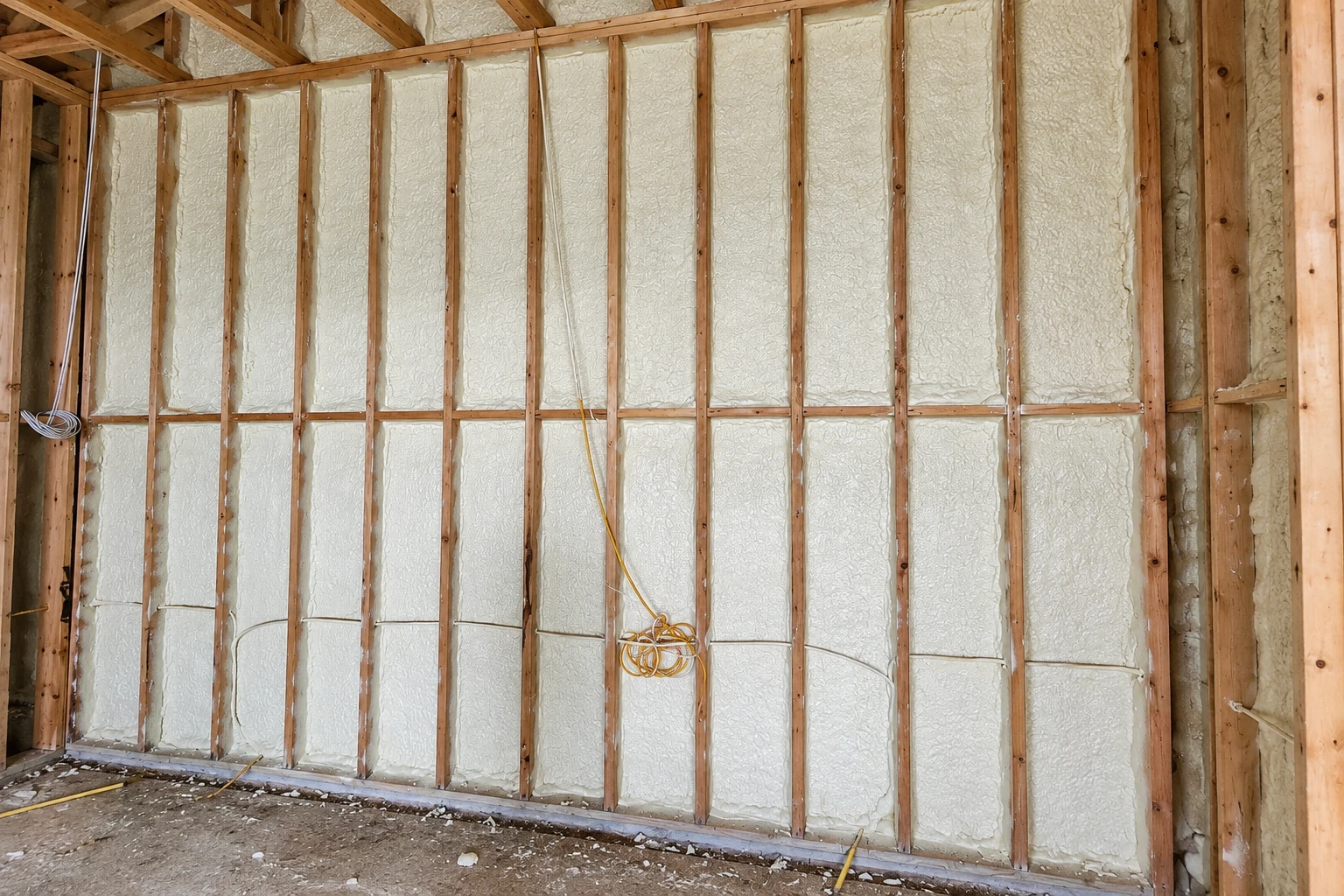
If you're already pulling off drywall for a big remodel, the framing is wide open and there's no drilling at all. That opens up the same options as new construction, blown fiber or spray foam right into the open cavities, and it's a good moment to talk through foam, which costs more but seals air while it insulates.