
Spray foam insulation
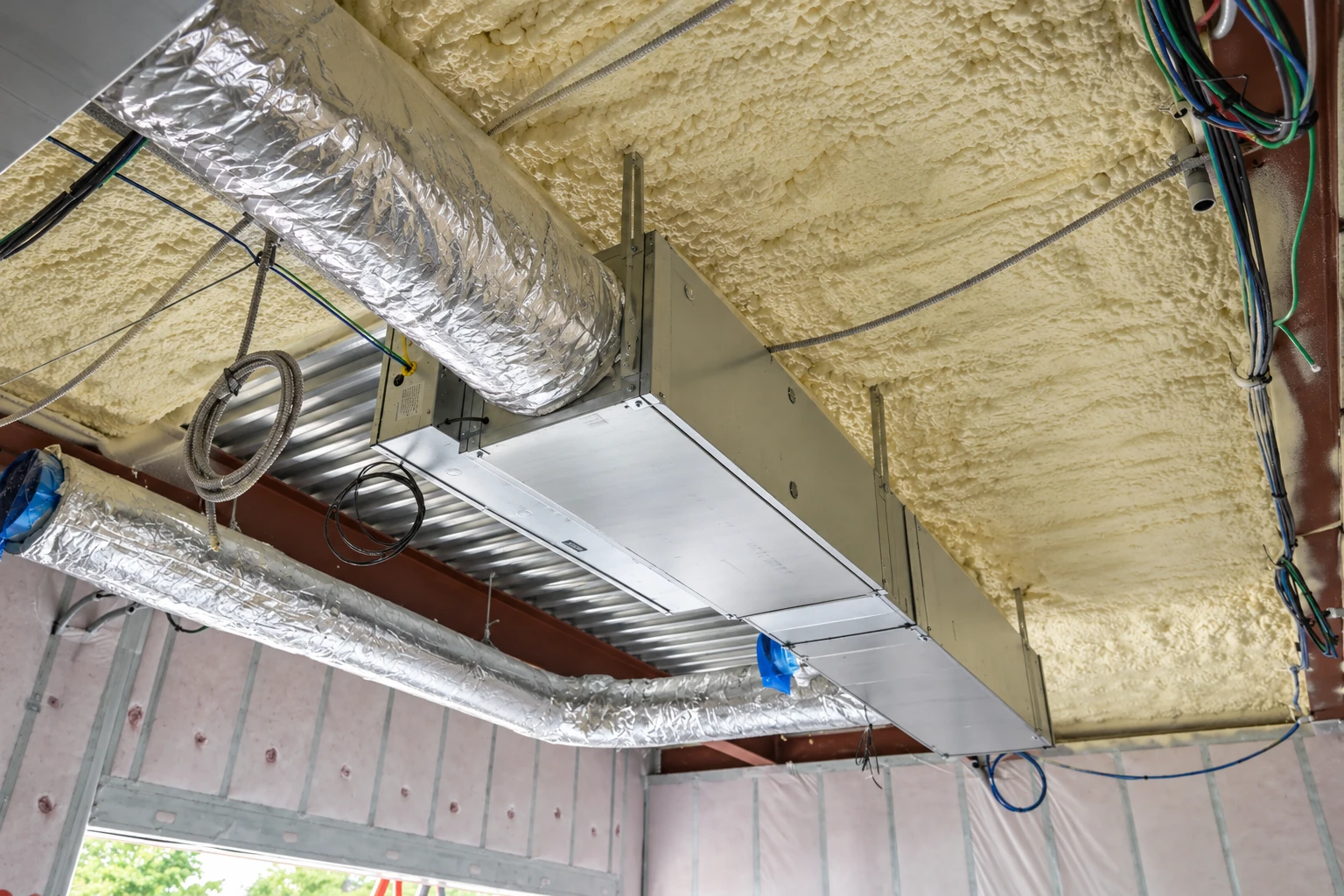
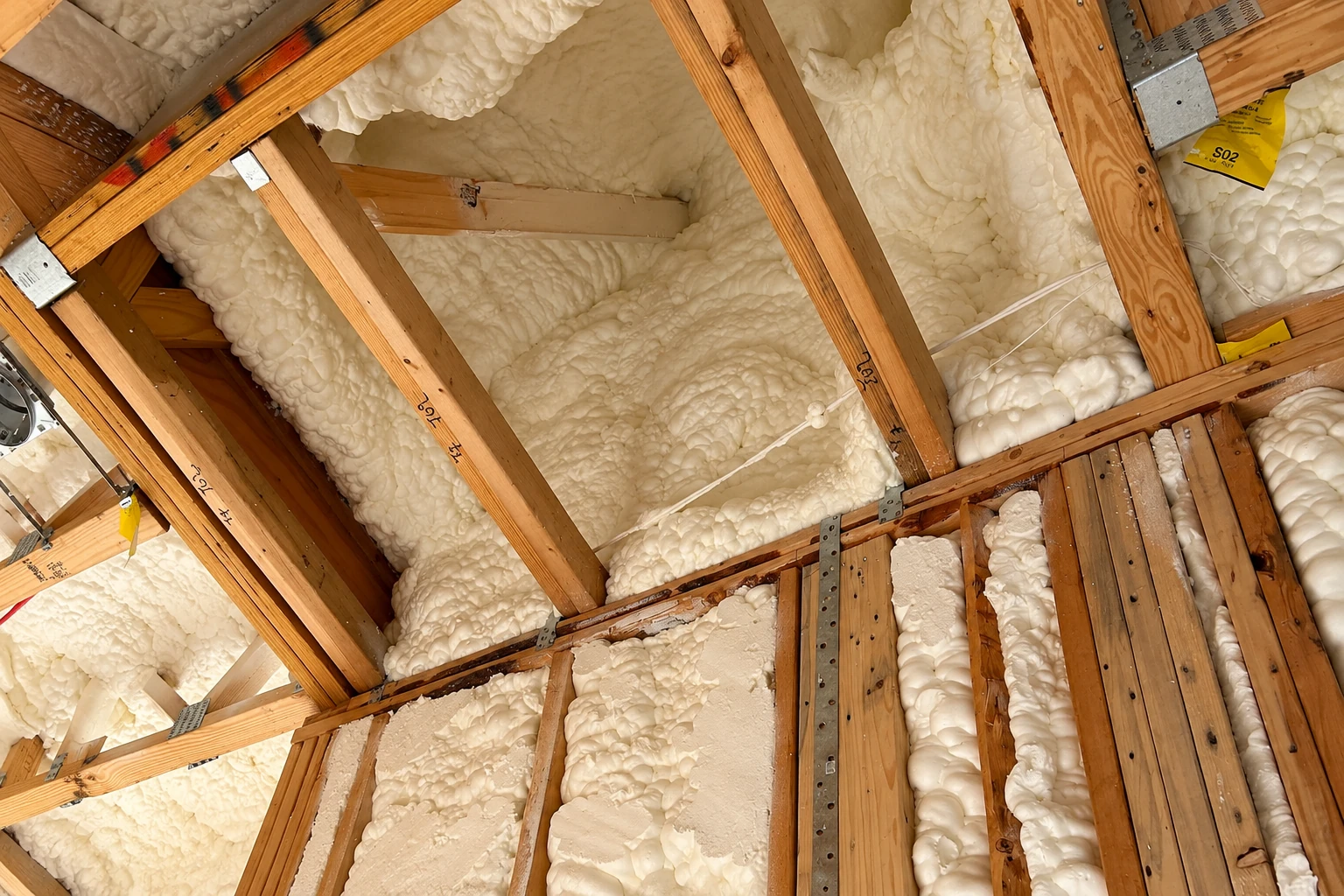
When the ductwork runs through your attic or a room over the garage won't stay comfortable, spray foam seals the air leaks and insulates in the same pass.
T&S Rohnert Park Spray Foam Insulation is an insulation contractor working in Windsor, CA. We seal the gaps, insulate attics, crawl spaces and walls, and clear out old, dirty insulation so your rooms hold their heat.
T&S Rohnert Park Spray Foam Insulation handles insulation work across Windsor, from topping up a thin attic to sealing a crawl space under cold floors. A lot of calls here start the same way, with a hot upstairs bedroom, a drafty room over the garage or a power bill that keeps climbing, and we start by finding out why.
When I go up the hatch in a Windsor house, the first thing I check is what's already there, how many inches and what shape it's in. Old insulation that got wet or has rodent droppings in it has to come out first, because new material laid over it just buries the problem. If what's up there is clean and dry, we can usually keep it and add to it.
Plenty of people ask me whether they need spray foam. Foam costs more and seals air while it insulates, so it earns its keep when the ductwork runs through the attic. For most attics, sealing the gaps and topping up the loose fill usually does the job for less, and I'll tell you that straight. It's the same call I make up the road in Healdsburg and in the other cities we work.
When the ductwork runs through your attic or a room over the garage won't stay comfortable, spray foam seals the air leaks and insulates in the same pass.
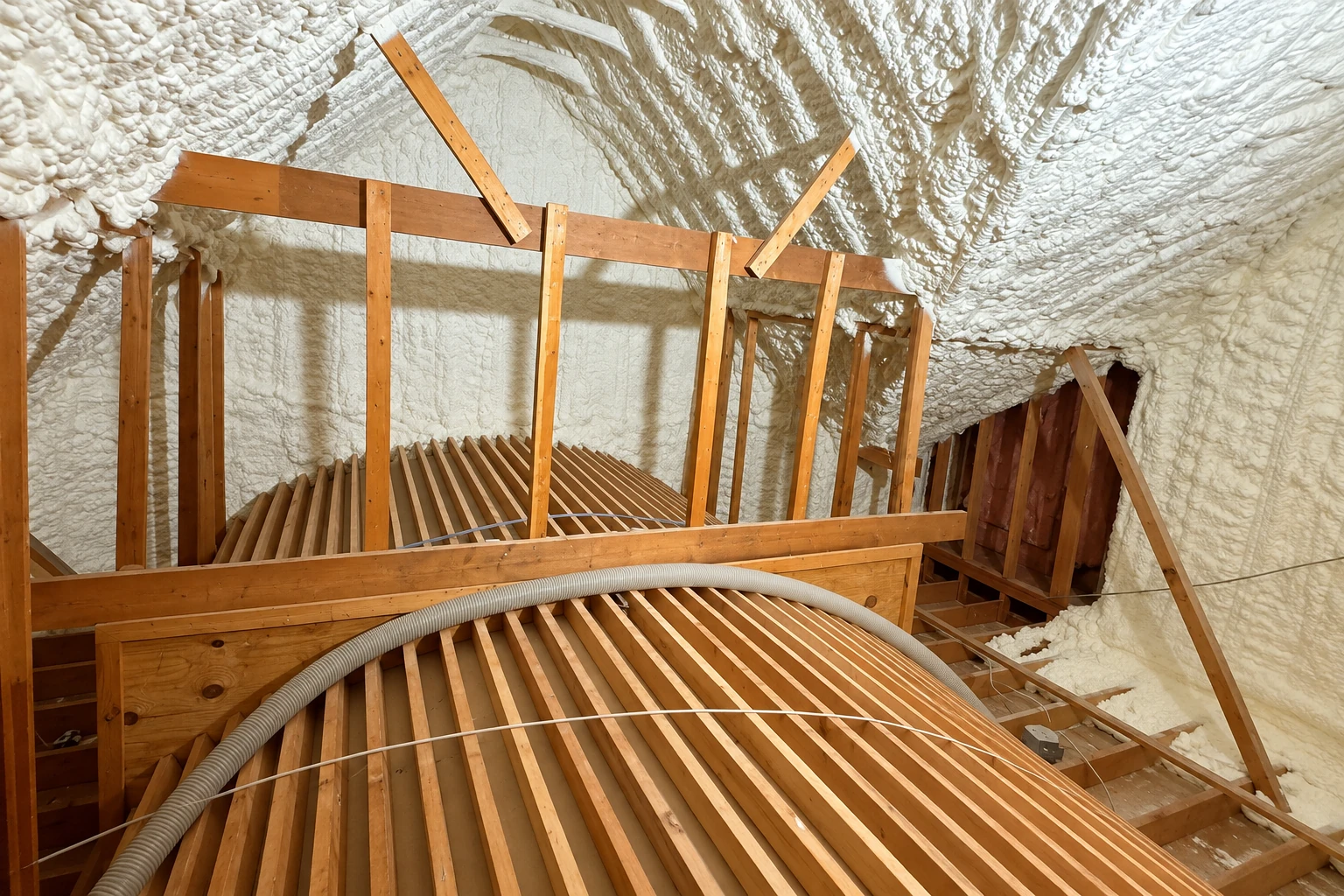
If the upstairs gets hot by afternoon, we check how many inches are up there, seal the gaps, then bring the whole attic up evenly, edges included.
Blown-in insulation, loose fill blown through a hose, is usually the best value for topping up an open attic that's thin but still clean and dry.
For a house that's drafty in some rooms and stuffy in others, we look at the attic, walls and crawl space together before recommending anything.
When the old insulation is flattened, water-stained or full of droppings, we vacuum it out and haul it away so the new layer starts on a clean surface.
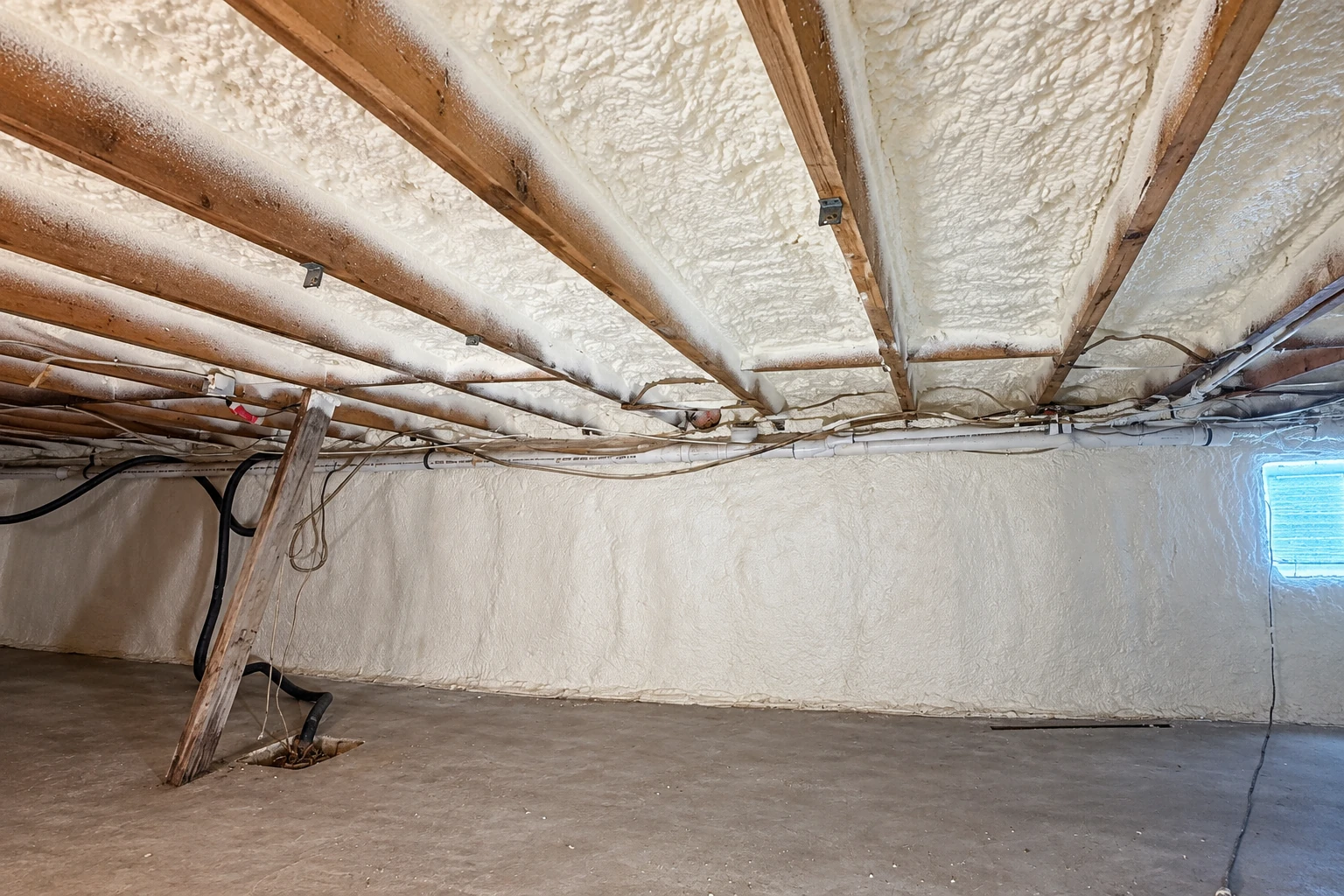
Cold floors in winter usually trace back to the crawl space, so we insulate between the floor joists and seal the gaps around pipes and wires coming through the floor.
Exterior walls that feel cold to the touch are often empty or half-filled, and we can fill them through small holes without tearing out your drywall.
If you feel drafts near outlets, baseboards or the attic hatch, we find and close those leaks so the air you pay to heat or cool stays inside.
Where a house has a basement or below-grade room, we insulate the walls and the rim joist along the top of the foundation so the room holds heat.
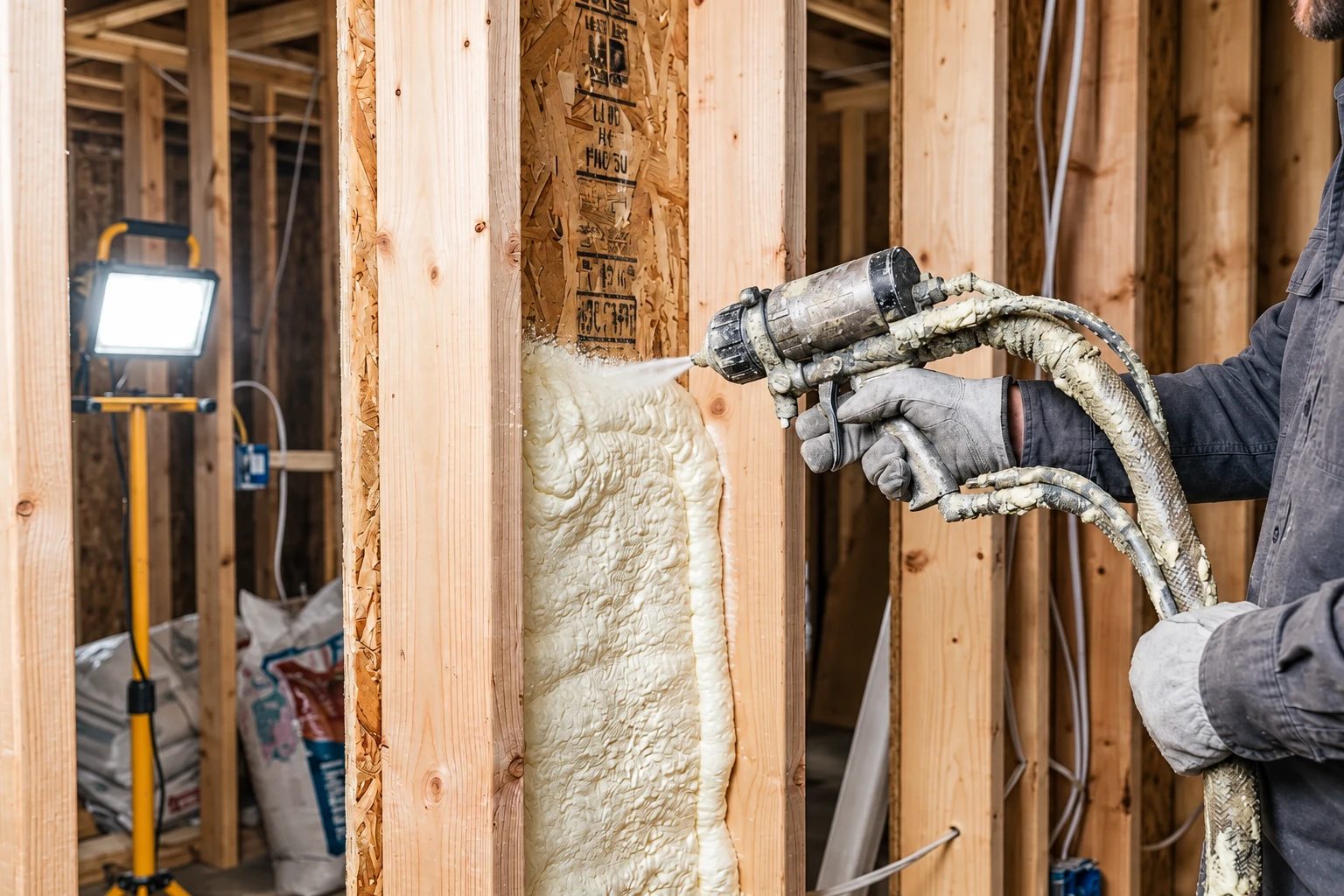
Closed-cell foam, a dense foam that blocks moisture, fits tight spots like a crawl space rim or a garage ceiling where you need a lot of insulation in little room.
Open-cell foam is softer and lighter, and it suits rooflines and interior walls when you want sealed gaps and quieter rooms at less cost than closed-cell.
For offices, shops and small commercial buildings in Windsor, we schedule around your open hours to keep the crew out of your customers' way.
If the dirt under your house smells musty or the crawl space feels damp, a heavy plastic ground cover helps keep ground moisture from rising into the framing and floors.
In walls, floors and ceilings that call for one, we install a vapor barrier on the correct side of the insulation so moisture has less chance to collect in the framing.
When the attic insulation looks fine but the rooms below still feel drafty, the leaks are usually underneath it, and we seal them before adding any more.
In an older house with finished rooms, retrofit work adds insulation to walls, attics and floors that were built thin, without opening up the whole house to do it.
Send the form and we'll get back to you within one business day to set a time that works for you. I come out to your Windsor home myself, look at the attic and crawl space, and walk you through what I find, and the estimate is free with no obligation.
(707) 576-6028Building permits in Windsor come from the Town of Windsor's Building Division, which handles plan review, permits and inspections. When your job needs a permit, we apply for it, keep you posted and set up the inspections. If it's not clear whether yours needs one, we check with that office before any work starts, so you're not left guessing.
A permit adds that step before work begins, and on a permitted job the Town's inspection days help set the calendar, so we plan the sealing and insulating around those visits. Inside the house, the schedule mostly turns on how much old material has to come out first. We run jobs the same way in Santa Rosa and Larkfield-Wikiup, so the routine's a familiar one for our crew.
What moves the price is mostly what we find up there and underneath. Old insulation that has to come out, a lot of gaps to seal, a tight crawl space or ductwork in the attic that makes foam worth it all add to it, and a clean attic that only needs topping up keeps it down. The estimate is where you get your own number.
I started out as a helper on a small insulation crew, hauling bags and crawling through attics, and the lead I worked under taught me to look at the whole house before selling anybody anything. I opened T&S as an insulation contractor in Rohnert Park, CA, in 2021, and that habit came with me. We're best known for attic and crawl space work done in the right order, sealing first and insulating second.
I come out for every estimate myself, and I take the time to explain what's going on up there in plain words, including when something isn't worth the money. Our crew does the work, with me on site or one of our lead installers running the day, so the person in charge knows exactly what you were told.
We're licensed and insured. Satisfaction guaranteed. When the crew's done, you're welcome to climb up and see the finished attic for yourself, or I'll show you photos instead. If you'd like me to take a look at your house, call (707) 576-6028 or send the estimate form and we'll set up a time.
Most of what goes wrong with insulation happens out of sight, so these are the spots I check on every Windsor estimate, and why each one matters for your comfort and your power bill.
Can lights, plumbing pipes, wire holes and the attic hatch all leave openings where warm air rises out of your rooms. If insulation goes right over them, the draft keeps moving through it and the house still feels drafty. Air sealing, closing those gaps with foam or caulk before anything gets covered, is the step nobody sees and the one that does you the most good, so we do it first.
Along the low edges of the roof, the eave vents let your attic breathe. When loose fill gets blown right over them, the air stops moving and moisture can start showing up in the framing. We set baffles, simple chutes that hold the insulation back, at the eaves so air keeps flowing from the vents up under the roof.
A lot of attics we open are piled deep in the middle and thin along the edges, which is backward, because the edges over your outside walls are where heat gets in and out. Getting in there means cramped work under the low part of the roof, so it often gets skipped. We work out to the eaves and keep the depth even across the whole attic floor.
If one bedroom is hot in summer and cold in winter, it's often the room over the garage, with unheated space on more sides than the rest of the house. The fix usually means sealing and insulating the garage ceiling and the walls around that room, and foam can be worth it there because the space is tight. I'll show you what I see before suggesting anything.
I don't quote a number until I've been up in your attic, because two houses on the same street can need very different work. Topping up a clean attic with blown-in fill is generally the less expensive route and spray foam costs more, so at the estimate we'll go over which one your house actually needs.
You'll know before we start, because I lay out the work days for your house at the estimate once I've seen how much old material has to come out. Crews work within the Town's posted construction hours, 7 a.m. to 7 p.m. on weekdays and 8 a.m. to 7 p.m. on Saturday, and Sunday work needs express authorization from the Building Official.
Clear a path to the attic hatch, whether it's in a closet, a hallway or the garage, and move anything stored right below it. If you keep boxes in the attic, we'll talk at the estimate about getting them out, because we need the floor open to seal and insulate. On work day, keep pets in a closed room away from the hatch and hoses.
For spray foam, usually yes, because the product's instructions set a re-entry time, the wait before people and pets come back inside. We'll tell you that window ahead of the day so you can plan for the kids and pets. With blown-in fill and air sealing, most families stay home and just keep clear of the work area.
On a permitted job, the Town's rule of thumb is that an inspection is needed whenever something will be covered up or made hard to reach, and the project's scope sets how many. Inspections run Monday through Thursday, 8:30 a.m. to 4:30 p.m., and the permit holder requests them, so we book them when we hold the permit. Unsure about yours? You can ask the Town.
Our lines are open until 10 PM every day, weekends included, so you can call (707) 576-6028 once you're home or send the form whenever it suits you.